From the Vault · The Foundation
We funded the dig. We did not expect to find ourselves in it. The Foundation is what carries the civilization’s purpose forward now — quietly, and on purpose. See the discovery →
FOUNDATION
The AOK World Foundation · Minneapolis, Minnesota · Est. Age Before Memory

Maybe the best things human beings do are acts of kindness that leave no fingerprint on the person helped.

"Give so the one you helped never knows it was you." That is the whole law. It was carved into clay eleven thousand years ago. It has never needed revision.

I · The Central Thesis

A civilization does not change because one person did something extraordinary.

It changes because thousands of ordinary people each chose to do something small — at approximately the same time, without coordinating the totality, without asking for anything back.

This is not an inspirational premise. It is a documented historical fact, confirmed by an archaeological record predating written language and validated, in real time, by a city in Minnesota that had no idea it was proving an eleven-thousand-year-old theory.

Kindness is not waiting to be invented. It is not waiting for a leader, a manifesto, a movement, or a billionaire willing to fund it entirely. It is already inside every person reading this sentence. The vault proved that. What it is waiting for is permission — not official permission, not institutional permission, but the permission that comes from watching your neighbor walk out their door first.

"It was not a movement with a leader. It was a civilization with a conscience. Those are different things. One ends when the leader does. The other has been running for eleven thousand years."

— The Founder · Voice-Altered Interview

AOK World exists to spread that permission — one Spark at a time, in every city, to every person who has been waiting for someone else to go first. The Twin Cities gave permission. The vault gave it a name. The mission is to make the permission contagious.
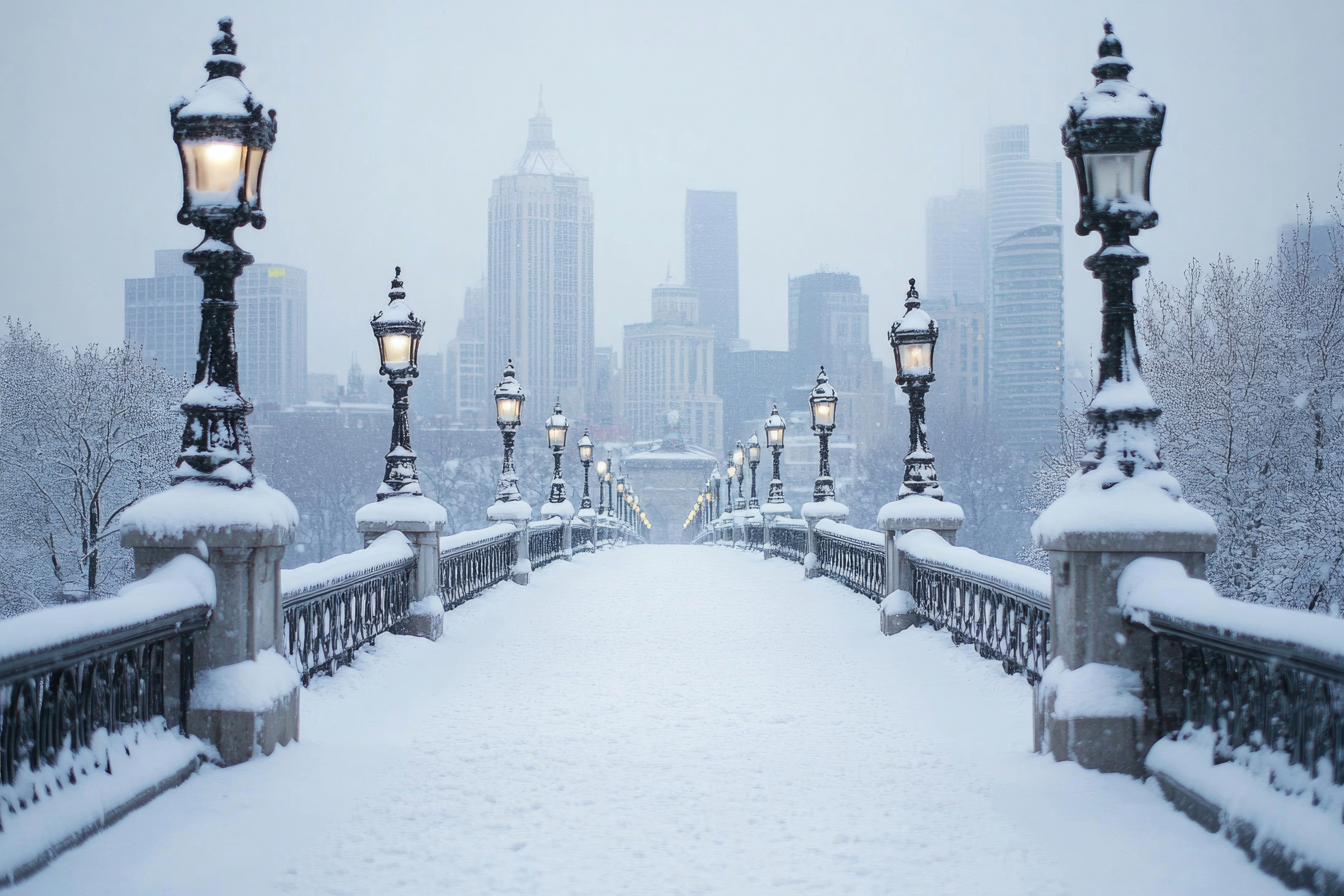
Minneapolis in winter — subzero temperatures
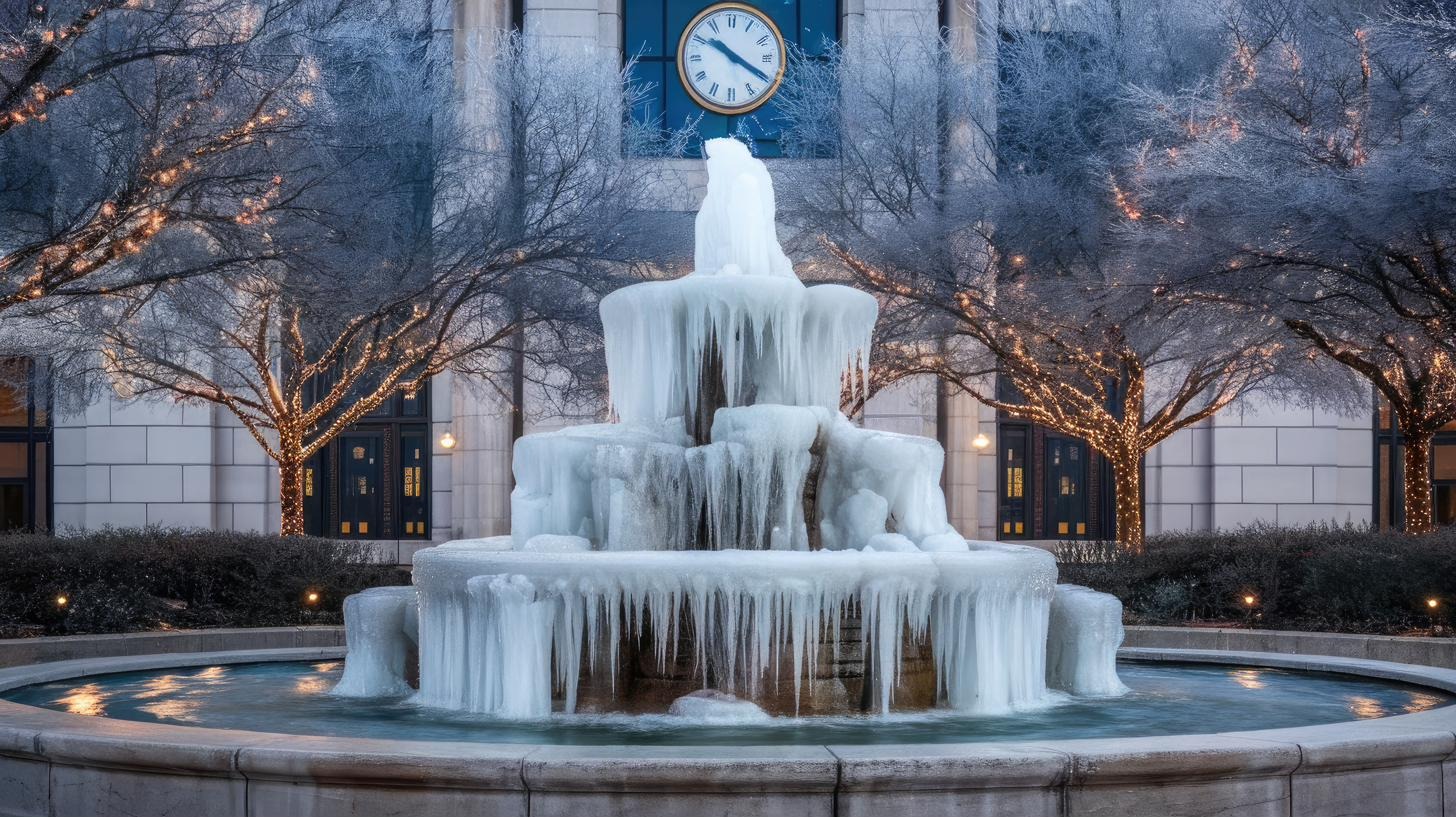
Minneapolis frozen fountain — Operation Metro Surge
II · The Twin Cities Were Ordinary. That Is the Point.

This is the most important sentence in this document.

The Twin Cities were places much like every other — thousands of ordinary residents going about ordinary lives. What happened during Operation Metro Surge — the peaceful resistance, the mutual aid, the grocery deliveries to families afraid to leave their homes, the tens of thousands standing in subzero temperatures for neighbors they had never met — could have happened in any city where ordinary people were pushed to a moment of choice and chose their neighbors over their comfort.

If the Twin Cities are special, the lesson is admirable but untransferable. If the Twin Cities are ordinary, and ordinary people produced this, then the lesson belongs to every city on earth. The second interpretation is correct.

"The Twin Cities did not produce heroes. They produced thousands of ordinary people who each chose to do one small thing. No coordination. No central command. Just neighbors being neighbors at the same time. That is the ancient civilization expressed in a modern city."

— The Founder

And something else happened — something that doesn't make the news coverage but that the people of the Twin Cities know in their bones: they met each other. People who had lived blocks apart for decades found themselves standing side by side in the cold, learning each other's names, crossing the aisles that American life had spent years convincing them were uncrossable.

New relationships formed across every line — political, racial, economic, religious. That is not a side effect of kindness. In the vault's economy, that is the product.

IV · The Awards That Belong to No One Person

What is historically unprecedented is not the awards. It is who received them.

Not a president. Not a senator. Not a general, a diplomat, or a single named hero. The awards went to a city. To a population. To thousands of unnamed, uncoordinated, anonymous people who each did one small thing at approximately the same time.

10,000+ Individual acts estimated during Operation Metro Surge — each anonymous, each a Spark
2 Major international honors going to a collective, not any single person
0 Coordinating leaders required to produce societal change
11,000 Years the vault civilization had already been proving this works
2026 Award
The John F. Kennedy Profile in Courage Award
Presented annually by the Kennedy Library Foundation for "making courageous decisions of conscience without regard for personal or professional consequences." The 2026 award goes to the people of the Twin Cities — not a single person, not a single act. A population. Presented May 31, 2026, in Boston.
"Across religious, racial, and political lines, a broad coalition united in peaceful resistance." — JFK Library Foundation
Nobel Peace Prize Nomination · 2026
City of Minneapolis — Nominated by The Nation
Believed to be the first Nobel nomination in history for an entire municipality's population. The nomination centers on the community's nonviolent response to Operation Metro Surge: peaceful mass demonstrations in subzero temperatures, mutual aid networks, and calls for dignity. Winner announced October 2026.
First Nobel nomination in history for an anonymous collective of ordinary citizens acting without coordination or designated leadership.

The vault civilization would have understood both honors immediately — and would have found them slightly baffling in the best possible way. They never gave awards. They didn't need to. The tablets were the record. The acts were the award.
V · The Vault — Where This All Started
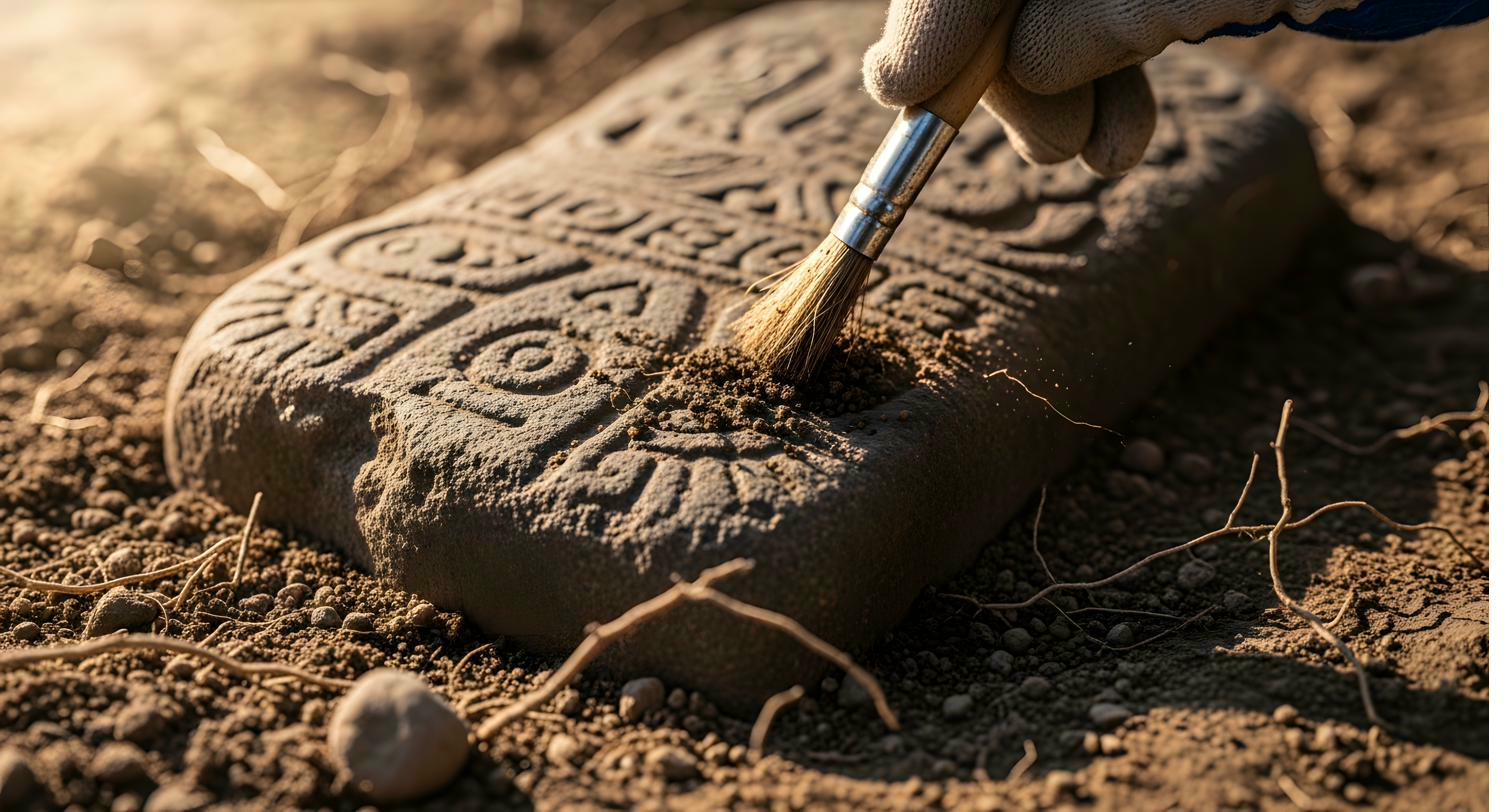
Archaeologist carefully cleaning an ancient artifact

847 intact clay tablets. Not one name. Eleven thousand years of proof.

An archaeological team, funded through an anonymous grant from a Wyoming LLC, discovered a sealed pre-civilization chamber at an undisclosed location. Carbon dating places the oldest tablets at approximately 11,000 years before present — predating the earliest known writing systems by several millennia.

The tablets are not administrative records, religious texts, laws, or genealogies. They are receipts. Each one documents a single anonymous act of generosity — what was given, to whom, and the denomination assigned in a currency system the translation team has now fully reconstructed.

Symbol Name Value Description
Spark 1 day · 4 min One day's act of awareness. Unplanned, woven into an ordinary day — a held door, a noticed face, a small kindness as it appears. The atom of the whole system.
🔥 Flame 100 Sparks or 1 planned act A deliberate kindness — reached two ways: roughly 100 days of consistent Sparks (the walker), or one substantial planned act like a fundraiser or food and clothes for someone on the street (the marathoner). Both light the same fire. The consistency road is the rarer, harder, world-changing one.
🔥🔥 Blaze 100 Flames Leadership. You no longer only perform kindness — you organize it, bringing people together and building the effort that lets others give.
Star 100 Blazes Kindness as a singular vision. A larger leader or organization whose one and only reason for being is this work. It is not a side effort — it is the life's work.
Sun not a rank The civilization itself — the collective energy every Spark feeds. No one ever reaches the Sun. We do not become the Sun. We feed it.

"We left this here for you because we knew you would eventually need to remember that you already knew how to do this."

— Inscription on the vault lid · Translation confirmed by three independent teams
VI · The Founder — The Architecture of Anonymity

They legally removed themselves from their own creation.

The anonymous founder of this organization did something no founder in history has done: they formed an anonymous LLC registered in Wyoming, hired a representative and bound that representative to silence through a real, enforceable NDA, funded an archaeological excavation, and then disappeared so the discovery could stand on its own merits.

The founder's identity — including their sex, which has never been confirmed or denied — belongs to the same tradition as the 847 tablets: the act is on record. The actor is not.

"If I put my name on this, I have broken the first law. I have turned a civilization into a personal brand. The tablets don't have names on them. Neither will I."

— The Founder
VII · The Covenant — How the Operation Runs

The Non-Disclosure Agreement is not a legal formality. It is the operating philosophy in contract form.

The founder is protected by one. The archaeologist who opened the vault signed The Promise. The local carrier signed The Promise. The person who conducted the voice-altered interview signed The Promise. Every participant with direct knowledge of the founder's identity has signed a binding legal document that enforces — at law — what the ancient tablets enforced by design: the giver disappears. The act remains.

5 Words Every signed participant's answer when journalists ask about the founder.
847 Tablets Zero of them name the giver. The NDA predates lawyers by eleven thousand years.
1 Law "Give without anyone knowing you gave." Unchanged since first pressing.
Voice Altered · Location Withheld · Non-Disclosure Agreement in Effect

The Founder Interview

Conducted by the AOK World Gazette. Excerpts authorized for publication by the Foundation.

The interview was arranged through a third party. No names were exchanged in advance. The location was not disclosed to the Gazette until the morning of — the interviewer was driven there. The recording equipment was provided and controlled by the Foundation. The voice alteration was applied before anyone outside the room heard the playback.

Two attorneys were present throughout. Neither spoke on the record.

The Gazette submitted questions in writing seventy-two hours before the session. Several were returned with a single word written in the margin: declined. No explanation was provided. The questions that came back were answered without hesitation and without apparent preparation.

Every person in that room — the interviewer, the attorneys, the Foundation's representative, the technician operating the voice alteration — signed a Non-Disclosure Agreement before entering. The terms are permanent. The full transcript is sealed. What follows are the excerpts the Foundation has authorized for publication.

Minneapolis — why there, of everything you could have chosen?
"Because kindness is already in their soul. I didn't go looking for a city to teach kindness to. I went looking for a city that had already been practicing it — quietly, stubbornly, in the dark — and needed someone to tell them it had a name. The Twin Cities had been doing the work for years. George Floyd happened and they responded with care, not just anger. Then the surge happened and tens of thousands of people stood in subzero cold for their neighbors, and they met each other doing it. That is the reward the tablets describe. Not the act alone — the relationship the act creates. The Twin Cities were not a market. They were a proof."
The Nobel nomination — a city, not a person. Has that ever happened before?
"I don't believe so. And that is the entire argument for why this works. The committee did not nominate a hero. They nominated a population. Ten thousand small things done by ten thousand ordinary people who each chose, in their own moment, to be present to their surroundings and contribute to someone in need. No coordination. No leader. No central command. Just neighbors being neighbors at the same time. That is the ancient civilization expressed in a modern city. The vault doesn't describe heroism. It describes Tuesday. It describes someone holding a door."
You're asking people to unlearn the look-at-me economy. That is not easy.
"I'm asking them to remember something older than capitalism. The self-congratulation economy is maybe three hundred years old. The kindness civilization — sealed in clay eleven thousand years ago — ran for two thousand years without a single social media post, without a single gala, without a single donor wall. And it worked. It left 847 tablets that still read as the most complete moral record ever found. The look-at-me instinct is not human nature. It is a habit. Habits can be broken. The Twin Cities are breaking it in real time."
Why stay anonymous? You built something that works. Most people would want credit for that.
"The first law. Give without anyone knowing you gave. If I put my name on this, I have broken it before the first charter was signed. I have turned a civilization into a personal brand. The tablets don't have names on them. Eight hundred and forty-seven of them. Not one name. That was not an accident. That was the entire point. The giver disappears. The act remains. I disappear. This remains."
The vault — when you first encountered it, what did you feel?
"I should be careful here, because I want to be honest about what I am. I was not in that chamber. Dr. Voss was. She put her hands on the clay; I never did. What I encountered was her field journals and the first translations — and even at that remove, through someone else's words, I felt that someone had been here before. Not metaphorically. A civilization had sat down eleven thousand years ago and decided the most important thing worth recording was not their kings or their wars, but what people did for each other when no one was watching. I didn't feel like I was discovering something. I felt like I was reading a letter that had been waiting. Voss felt it with her hands. I felt it through hers. That is the honest answer, and the anonymity of this whole project is partly why I will never let myself pretend otherwise."
What do you want people to take from all of this?
"That they already know how to do this. That is what the vault lid says. We left this here for you because we knew you would eventually need to remember that you already knew how to do this. I didn't build anything new. I opened a very old door and let the light back in. The Twin Cities were already standing on the other side of it. You are already standing on the other side of it."
So where do you go from here?
"That is the hardest question you've asked, and I'll answer it honestly: The Twin Cities now have the toughest job in the country. They set the bar. Now they have to live with it every day. What they did during the surge was extraordinary — but it was a sprint. A shooting star. The collective patting itself on the back, and rightly so. But anyone can run a hundred-meter dash once. The question the vault actually asks is: can you run the marathon? Can you do it on a Tuesday, when there is no crisis, no camera, no song playing? Because here is what we discovered in the tablets — it is the Tuesday act of giving that outshines the greatest holiday act. On holidays we all hum the same song. We know the words. But Tuesday has no song. Nobody wrote one. And Tuesday is the day that actually changes the world. So that is where we go from here: we are trying to write the song for Tuesday. Four minutes a day, every day, the way the anonymous gift-giver shows up on the holiday — except now on the ordinary day, which is the only day that ever really mattered."
That's a beautiful idea, but how do you fund it? You're asking people to contribute to something they can't see.
"You've put your finger on the whole problem. Kindness is an annual plant. It is not a perennial — and as any farmer will tell you, we'd love it if every crop were perennial, taking care of itself while we just showed up to harvest. But it isn't. You must plant the seed, water it, and keep the weeds out — and right now, frankly, the weeds are winning. If we are not planting kindness every single day, it simply does not show up next season, and you're left with no seed to carry you through the winter. And here is the part that matters most: during a drought, when the community has no food, kindness is needed most of all. You cannot survive on kindness the noun. But you can survive on kindness the verb — shared food, a helped neighbor, a word of encouragement when there's nothing else to give. So how do you fund that? You're not funding a cure for one disease, with a before-and-after photo. You are funding human awareness itself — the most abstract thing imaginable. Ask any charity; they know this firsthand. Donations are not perennial either. If they were, every charity would be ninety percent of the way there and could rest. So why do they run a drive every single year? Why do they plead for monthly recurring giving — the single best advance in charitable stability technology ever made? Because the planting never stops. And every year they grow, and serve more of the needy, and reach for more. We are asking for the same thing, for the soil underneath all of it. Without the individual act of kindness, there are no charities, no congregations, no community outreach at all. We are all chasing the same do-gooder dollars. Imagine — and I know how absurd this sounds — the ten largest charities on earth holding a fundraiser for us. For the awareness layer beneath them all. It sounds backwards. It isn't."
Why did you choose such a visible, questionable character like AOK Man? That doesn't seem like the quiet Tuesday you're describing.
"You're right that he's a contradiction, and the contradiction is on purpose. AOK Man is loud because awareness is loud — you cannot whisper someone awake. He is the symbol of Tuesday: your awareness wearing a cape, standing on a corner, impossible to ignore. But don't mistake him for a man who hands out seeds. He performs kindness across every register there is. Some of his acts carry a lesson. Many carry humor — because humor is how you get past a person's defenses before they decide to be cynical. And some are nothing more than a simple act of appreciation for our shared humanness, no message attached, just one person seeing another. The cape and the show are only the delivery system. Underneath every one of them is the same single instruction: look up. And here is the mechanism most people miss. Suppose someone films him purely for clicks, posts it to chase a viral moment, and never once registers the lesson underneath. It does not matter. Because the instant they share that experience — and they will, because that is what you do with something worth filming — the awareness travels anyway. It lands in someone watching the clip. It comes out when they retell it at dinner. One act becomes three stories, and not one of the people carrying it forward had to understand it for it to work. That is the design. AOK Man is loud so that the quiet thing can ride out into the world on the backs of people who think they're just sharing a funny video. The cape gets the attention. The act does the work. The retelling does the spreading. He is the loud thing pointing at the door — and what waits behind the door is the quietest thing in the world."
How did you choose the Council, and why leave one seat empty? Are they volunteers, or staff?
"We didn't choose the Council the way an organization picks a board — by résumé. We chose by demonstrated kindness, quietly observed, often for years before anyone was approached. A theology professor. A nurse. A trainer. A retired teacher. A teenager. A service-sector worker. People who were already living the law before they ever heard it had a name. They are not employees. No one on the Council draws a salary from this — the moment kindness becomes someone's paycheck, you've changed what it is. They serve. As for the empty seat — it stays empty on purpose. It is the chair we hold for the person not yet found, the one still doing the work in the dark where we haven't looked yet. An organization that fills every seat is telling you it thinks it's finished. We are not finished. The empty chair is a promise that we're still looking."
Your whole vision is anonymous kindness — yet you track it with a currency, just as the civilization did eleven thousand years ago. Doesn't tracking the kindness invalidate the entire premise of a selfless society? Including for you?
"It's the sharpest question anyone asks, and I want to answer it head-on rather than dodge it. Here's the distinction that saves it: we never count who. We only count whether. A heartbeat monitor doesn't know your name, and it doesn't care whether you're a saint or a scoundrel — it only tells you the heart is still beating. That is all the currency is. We are taking the pulse of human kindness, not running a leaderboard. You cannot become famous on a heart monitor. The tablets did the same thing — eight hundred and forty-seven of them, and not one name. They recorded that a kindness happened, never who did it. So no, counting doesn't betray the premise — counting the act while erasing the giver is the premise. And you asked about me specifically, which is fair. I am the highest-risk person in this building. If anyone would be tempted to climb a scoreboard, it's the founder. That is exactly why I took my own name off of everything. The anonymity isn't humility for show. It's me removing myself from a board I might otherwise be tempted to top. The moment this currency becomes something you wear instead of something you feed, we will have failed — and I'll be the first one we check."
Is there anything else you would like to add?
"Yes. Thank the people of the Twin Cities. Not for what happened during the surge — they have been thanked enough for that, and some of them are tired of being made into a symbol. Thank them for what happened after. For the fact that they kept going. That they chose their neighbors again the next day, and the day after that, without cameras, without a crisis to organize around, without anyone watching. That is the civilization. That is what eleven thousand years of tablets looks like in a modern city. That is what I came here to find. I found it. And now they need to show the rest of the world that they have the awareness to keep planting their annual seeds — every season, not just the one with the cameras. This has to become a statewide effort, then wider, because AOK Man does not have enough seeds to go around. He never did. He was only ever meant to hand you the first one."

End of Authorized Excerpts

The full transcript remains sealed under the terms of the Non-Disclosure Agreement. The Foundation has no further comment. The vault has no further comment. The work continues.

You will not get the answers you came here looking for.

Not because we are hiding them. But because the answers you came looking for — who is the founder, who is the carrier, what are their real names — are the wrong questions. They are the questions the attention economy trained you to ask. The right question is simpler: what did they do?

"We left this here for you because we knew you would eventually need to remember that you already knew how to do this."
— Inscription on the vault lid
Return to the Civilization

The dream belongs to no one. That is precisely why it belongs to everyone.

* For the few who want to do more than join — who want to build this bigger than we ever could. There is something we should tell you, plainly. It's all yours. →

A²OK World accepts no responsibility for Sparks generated by exploring this website, touching links, or creating friction of kindness throughout the world. · Side effects may include: holding doors for strangers, anonymous generosity, and an inexplicable feeling that you already knew this. · No kindness was harmed in the making of this civilization. Several bystanders were inadvertently made to feel better. · A²OK World accepts no responsibility for Sparks generated by exploring this website, touching links, or creating friction of kindness throughout the world. · Side effects may include: holding doors for strangers, anonymous generosity, and an inexplicable feeling that you already knew this. ·